
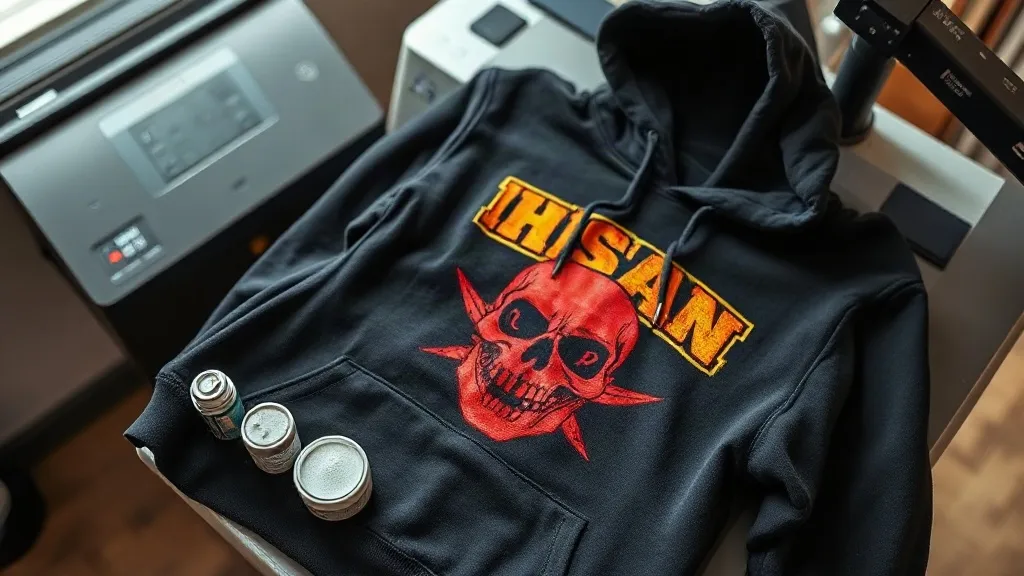
When a friend asked me to print twenty hoodies for his gym's anniversary, I had one weekend and no screen printing setup. That's how I ended up spending a Saturday afternoon peeling hot film off a sheet of transfer paper, and why I now keep a stack of dtf transfers in a drawer next to my heat press. Direct-to-film printing solved a problem that had bugged small apparel makers for years: how do you get full-color, photo-quality artwork onto a single shirt without setup costs that only make sense at volume?
This guide walks through what the process actually involves, where it beats other decoration methods, and the small details that separate a print that survives fifty washes from one that cracks by the third. If you are printing for a team, a brand, or just your own closet, the practical notes below should save you both money and frustration.
What a DTF Transfer Actually Is
A dtf print starts as a digital image, not a stencil. The printer lays down color inks and a white ink layer onto a special PET film, then the wet ink gets dusted with a hot-melt adhesive powder. That powder is the unsung hero of the whole process: it fuses the ink to fabric during pressing and gives the print its stretch and grip. Once the powder is shaken off and the film is cured, you have a transfer you can store, ship, or press weeks later.
The key difference from vinyl or screen printing is that the design arrives complete. There is no weeding tiny letters out of adhesive vinyl, no mesh screens to burn, and no color separations. You press the film face-down onto the garment, peel it hot or cold depending on the film type, and the image is on the fabric.
Film, Powder, and Press: The Three Ingredients
Most quality issues trace back to one of three things. The film needs to match your printer and ink type, the powder needs to be applied evenly and cured fully, and the press needs consistent temperature and pressure. A cheap press with an uneven platen will show up as patchy adhesion long before the transfer itself fails. If you are buying equipment, spend the money on the press first.
Why DTF Fits Small and Mid-Size Apparel Work
The economics are the real story. Screen printing requires a screen per color, so a six-color design on thirty shirts carries setup costs that can rival the garment cost. DTF has no per-color charge and no minimum order. A single shirt costs the same per unit as the hundredth shirt, which makes it ideal for on-demand stores, team orders with varied names, and one-off gifts.
There is also a creative freedom that other methods struggle to match. Gradients, photographic images, fine detail, and small text all reproduce cleanly because the print is digital. On a dark hoodie, the white ink layer keeps colors opaque instead of letting the fabric tint bleed through.
- No color-count limits or screen setup fees
- Works on cotton, polyester, and most blends
- Handles fine detail and full-color gradients
- Transfers store flat for months before use
- Single-piece orders are economically viable
Fabric Compatibility and Where DTF Falls Short
DTF adheres to a wide range of fabrics, but performance varies. Cotton and cotton-poly blends press beautifully and feel soft after a wash or two. High-polyester performance wear can be trickier because the fabric's own dye may migrate into the print at high heat, a phenomenon called dye sublimation bleeding. Low-temperature films and a pre-press step help, but testing on scrap is always wise.
Where DTF struggles is with stretch. On athletic compression wear, a rigid print can crack along stress lines. Stretchier films exist and help, but if your product is a cycling jersey or a swimsuit, sublimation or specialty stretch transfers may serve you better. Nylon, coated fabrics, and heavily textured materials also need a test press before you commit a full order.
The Hand Feel Question
Early DTF prints felt like a plastic sticker. Modern films and thinner powder layers have improved dramatically, and a well-pressed print on a cotton tee feels close to a plastisol screen print. The trick is pressing at the right temperature for the right time and not over-pressing, which flattens the ink and makes it stiffer. Follow the film manufacturer's spec sheet rather than a generic YouTube setting.
A Repeatable Pressing Workflow
Consistency is what turns a hobby into a reliable service. Here is the sequence I use, refined over hundreds of shirts.
- Pre-press the garment for a few seconds to remove moisture and wrinkles.
- Place the transfer with the printed side down and align it carefully; the film does not slide once heat hits.
- Press at the film's recommended temperature, usually in the 150 to 160 degree Celsius range, with medium to firm pressure.
- Peel according to the film type. Hot peel films come off immediately; cold peel films need to cool first.
- Cover with a protective sheet or parchment and press again for a few seconds to lock the print into the fibers.
That final second press is the step most people skip, and it is the one that most improves wash durability. It also smooths the surface so the print feels less raised.
Storage and Handling
Keep unused transfers flat, dry, and away from direct sunlight. Humidity can cause the powder to clump or the film to curl, and curled film presses unevenly. If you buy in bulk, store them in a sealed bag with a desiccant pack. Handle the printed side by the edges to avoid oils from your fingers interfering with adhesion.
Pricing and Positioning Your Prints
Because there is no setup cost, pricing should reflect your time and the garment, not a per-color markup. A common approach is to set a base price for the blank plus a flat decoration fee that covers film, ink, powder, and labor. For multi-piece orders, the decoration fee stays the same per unit, which keeps quotes simple and transparent for customers.
Positioning matters too. DTF lets you offer small runs that screen printers turn away, so lean into that. Custom names on team jerseys, pet portraits on sweatshirts, and limited-edition designs for local bands are all natural fits. The flexibility is the product.
Common Mistakes That Ruin a Print
Most failures are avoidable. Pressing too hot scorches the film and leaves a shiny, cracked surface. Pressing too light means the powder never fully bonds, and the print peels at the corners after a few washes. Skipping the pre-press leaves moisture in the fabric, which turns to steam and lifts the ink. And pressing directly on the film with a dirty platen cover transfers lint and dust into the print.
Wash care matters as well. Turn garments inside out, use cold water, and avoid fabric softener, which coats the fibers and can degrade the bond over time. Tumble dry low or hang dry. Prints treated this way routinely last well beyond the expectations most customers have for custom apparel.
Frequently Asked Questions
Can DTF transfers be applied to 100% polyester shirts?
Yes, but with care. Polyester is prone to dye migration at high temperatures, so use a low-temperature film and pre-press the garment to drive out moisture. Always run a test press on a scrap piece of the same fabric before committing to a full order, and consider a bleed-blocking underlay if the garment is a dark, saturated color.
How long do unused DTF transfers last?
Stored flat in a cool, dry place away from sunlight, most transfers remain usable for six to twelve months. Humidity is the main enemy because it affects the powder layer. Sealed bags with desiccant extend shelf life considerably, and it is worth labeling batches with the purchase date so you use older stock first.
Do I need a commercial heat press or can I use an iron?
A heat press is strongly recommended. Irons lack consistent pressure and temperature, and the results are unpredictable, especially on the second press that locks the print in. A small clamshell press is a modest investment that pays for itself quickly if you are printing more than a handful of items.
Will the print crack after washing?
A properly pressed DTF print on a compatible fabric should not crack under normal washing. Cracking usually signals under-pressing, over-pressing, or a fabric that stretches beyond the film's tolerance. Following the film's spec sheet and washing inside out in cold water prevents the vast majority of issues.
Is DTF cheaper than screen printing?
For small runs, almost always. Screen printing wins on large orders of simple designs because the per-unit cost drops once setup is amortized. DTF's advantage is no setup fee and no color limits, which makes it the better choice for one-offs, multi-design orders, and anything with photographic detail.